
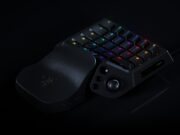
























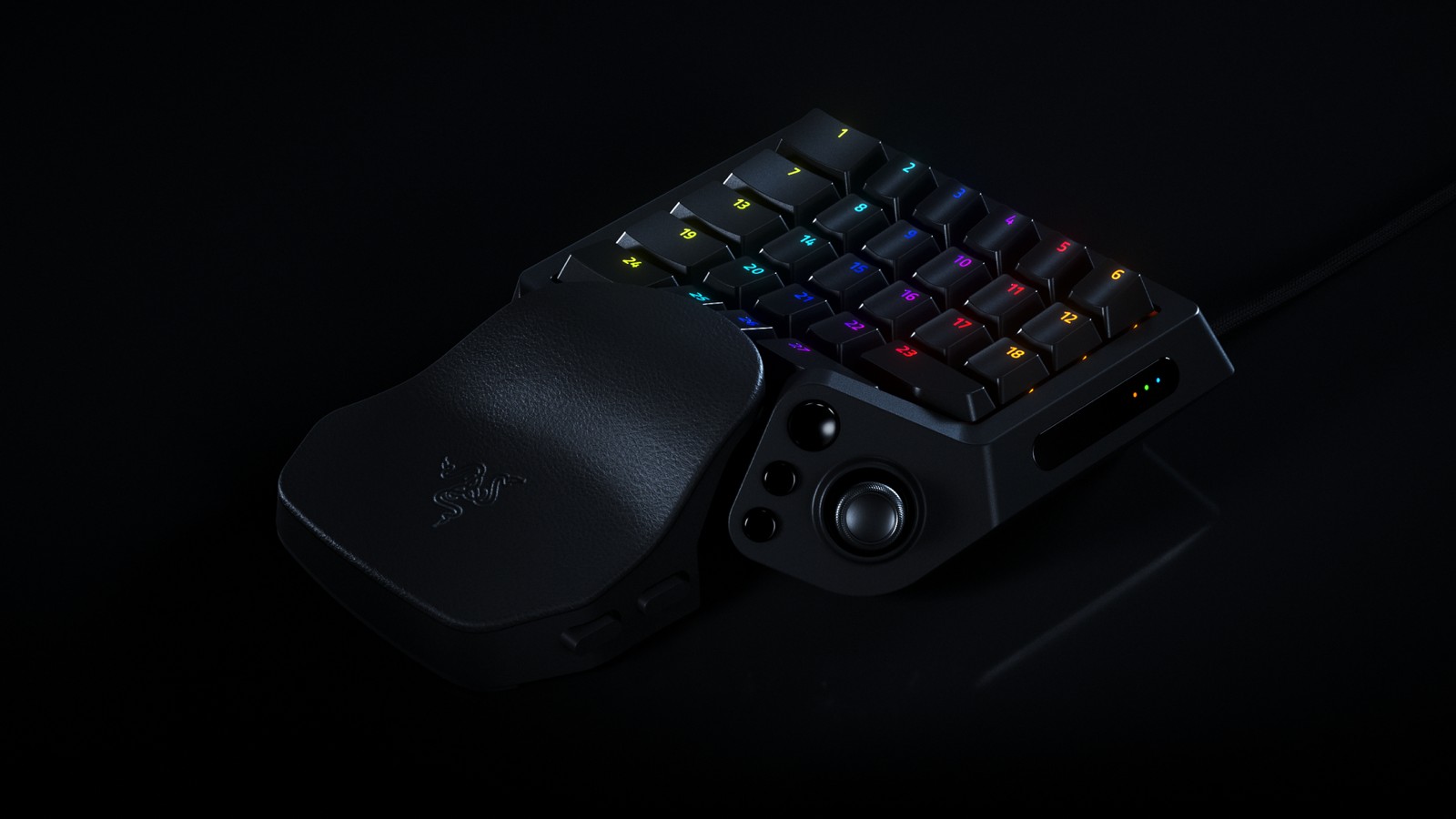
The Razer Tartarus V2 Pro is Razer’s first new one-handed gaming keypad since the Tartarus Pro. It borrows most of its parts list from the company’s flagship keyboards. Razer announced the keypad on September 17, and it is on sale now at $199.99. That is $70 more than the Tartarus Pro currently lists for.
The headline change is the switch. The V2 Pro uses Razer’s Analog Optical Switch Gen-2, with an actuation range of 0.1 to 4.0 mm. By comparison, the old Tartarus Pro’s switches adjusted between 1.5 and 3.6 mm. Rapid Trigger resets a key after as little as 0.1 mm of upward travel. Razer also rates each switch for 100 million keystrokes.
What changed on the Razer Tartarus V2 Pro
The thumb controls are the other big swap. Razer dropped the old eight-way directional pad. Instead, a full-sized analog thumbstick with TMR sensors takes its place, using the same anti-drift design as Razer’s controllers. Three buttons sit beside it: Hypershift, keymap cycle and profile cycle. Razer says the stick suits radial menus and analog movement, and the stick press takes a binding too.
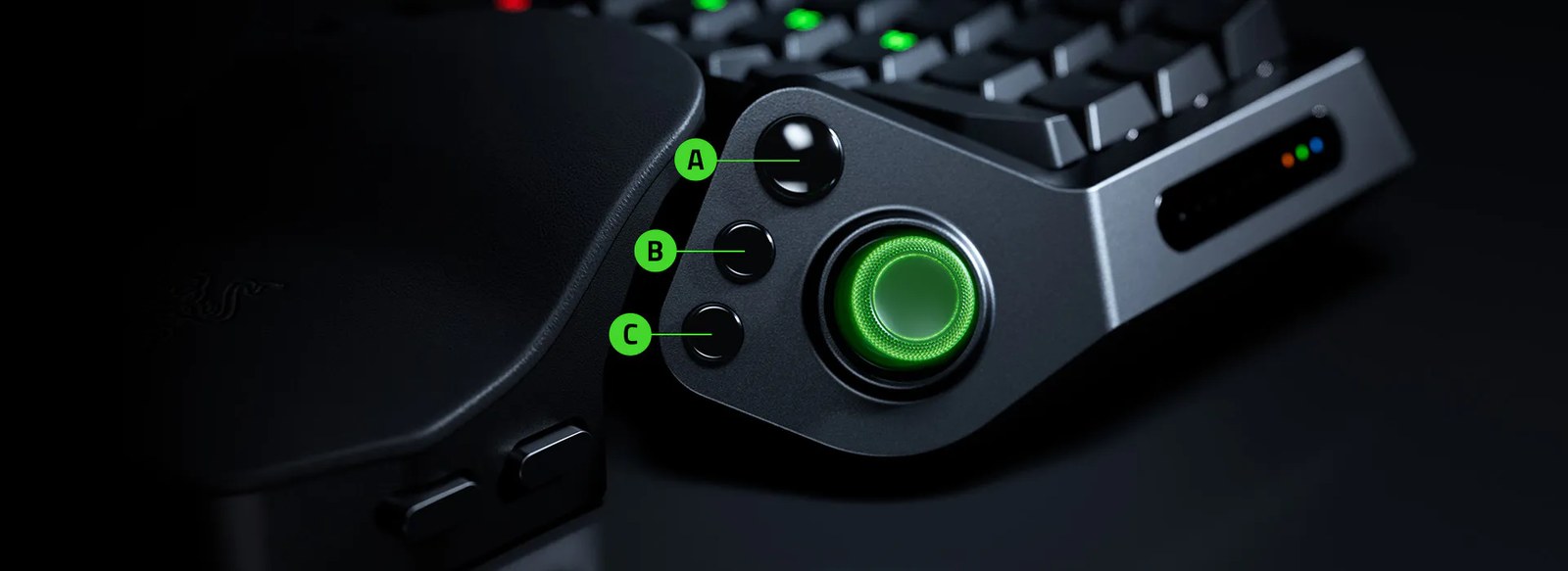
The key count actually drops by one, from 32 to 31 programmable controls. That is because the thumbstick now counts as one of them. In addition, Hypershift doubles the effective layout, since holding it swaps every key to a second assignment. Razer Synapse stores up to 24 keymaps across three onboard profiles. As a result, the keypad keeps its settings on another PC.
Polling jumps to a true 8000 Hz, eight times the usual 1000 Hz. Razer says that is a first for one of its keypads. The keypad also gets the Advanced Input Control suite from Razer’s keyboards. Specifically, that means Snap Tap, Snap Flex, Dynamic Keystroke and Dual-Keypress Priority.
Snap Tap, Snap Flex and the rest
Snap Tap prioritizes the newest input between two paired keys. In practice, a counter-strafe registers even while the first key stays held. Razer ships it off, and FN plus Left Shift toggles it. Likewise, Snap Flex fires a second action on key release, so one press and release can trigger two commands. Dynamic Keystroke goes further and assigns up to four commands to different depths of a single key.
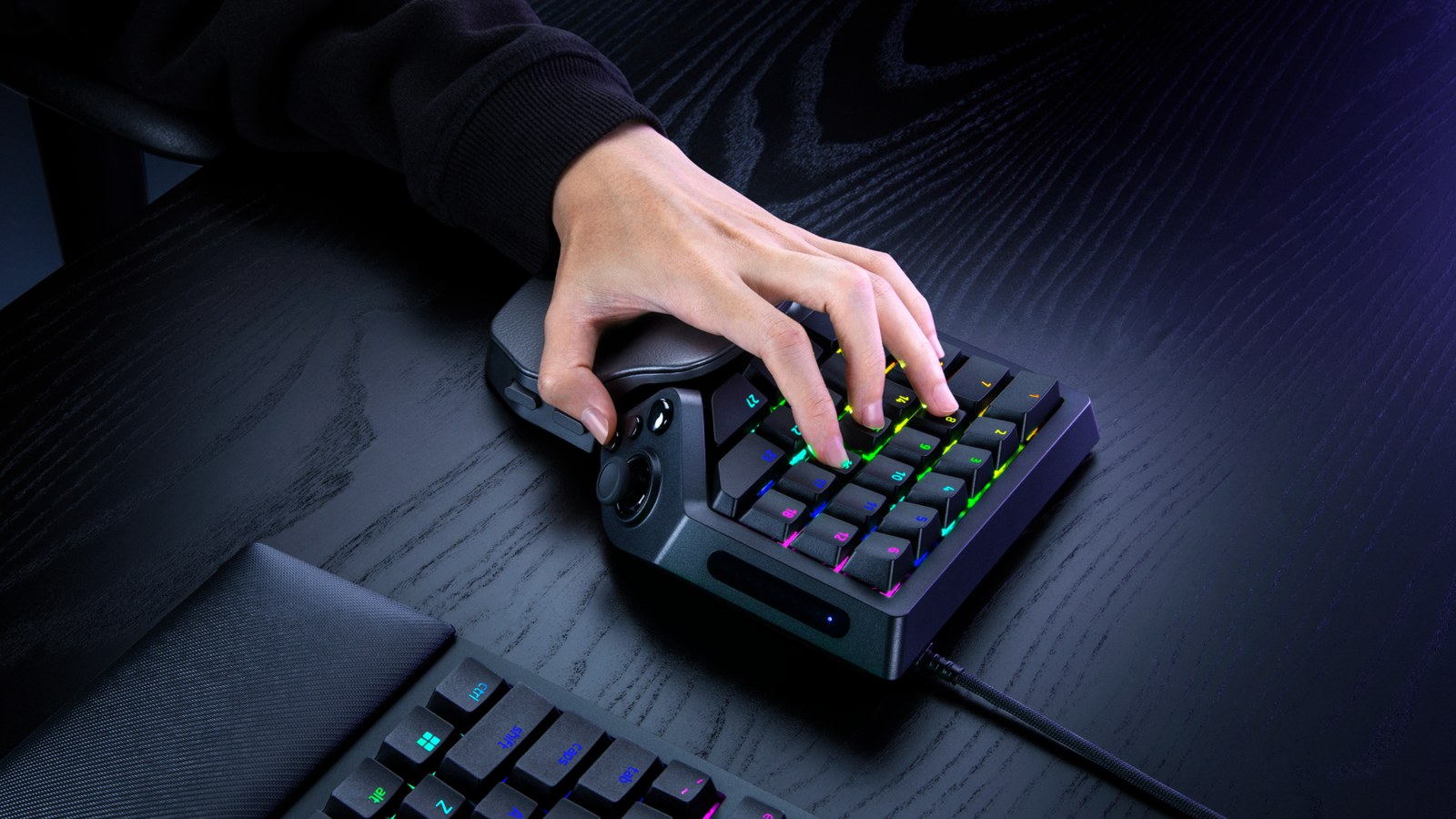
The wrist rest is new as well. It slides out and rotates left and right, with a 15 to 20 degree tilt range. In other words, it no longer locks into one position. Razer says the point is to keep the wrist aligned through long sessions.
Meanwhile, the keycaps are doubleshot PBT. Razer lubricates each switch and seats it in a foam layer for a quieter sound. At the default 2.0 mm actuation point, a key needs 40 g of force.
Specs, price and the catch
The rest of the spec sheet is short. Key feel is linear, and lighting is per-key Razer Chroma RGB. The cable is detachable USB-C, and the keypad supports N-key rollover with anti-ghosting. However, there are no media keys and no USB passthrough. Actuation and Rapid Trigger adjust on the device through an onboard LED array, with no software needed.
“The Tartarus V2 Pro is unapologetically maximalist: more inputs, finer controls, and more ways to make it your own,” said Barrie Ooi, head of Razer’s PC gaming division. That framing fits. Overall, this is a keypad for people who already know they want 31 keys under one hand.
That said, the catch is the price. At $199.99, the V2 Pro costs as much as a good full-size keyboard, and it is wired only. Still, Razer’s store offers $30 in store credit on launch-week orders. The Tartarus Pro also stays on sale at $129.99 for anyone who can live with the old thumbpad. Finally, it lands in a busy month for Razer, after the Clio X speaker cushion. Keypads are having a moment beyond gaming too, as OpenAI’s Codex Micro showed in July.